NCB at the Midwest Clinic: 1970-1979
Since its founding, the Northshore Concert Band has been a driving force in the community band movement, setting high standards for musical excellence and community engagement. Nowhere has this impact been more clearly demonstrated than through its decades-long relationship with the Midwest Clinic, the world’s largest instrumental music education conference. This series chronicles the Band’s history at the Midwest Clinic, beginning with its groundbreaking first invitation in 1963 and continuing through the present day.
After establishing itself as a pioneering force in the community band movement during the 1960s, the Northshore Concert Band continued to push boundaries throughout the 1970s. This decade saw the ensemble expand its repertoire, incorporate new artistic voices, and tackle ambitious programming that would cement its place among the nation’s premier concert bands.
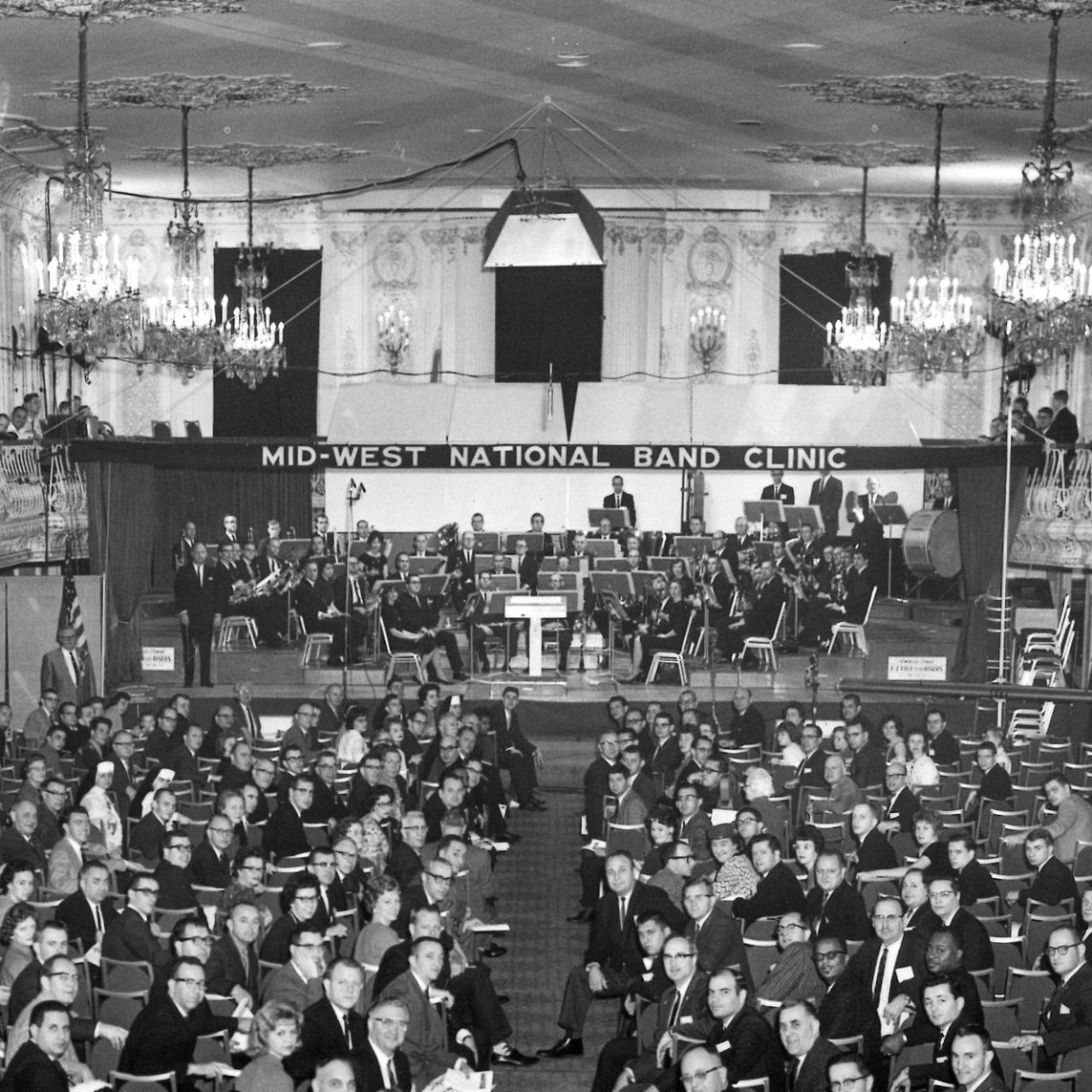
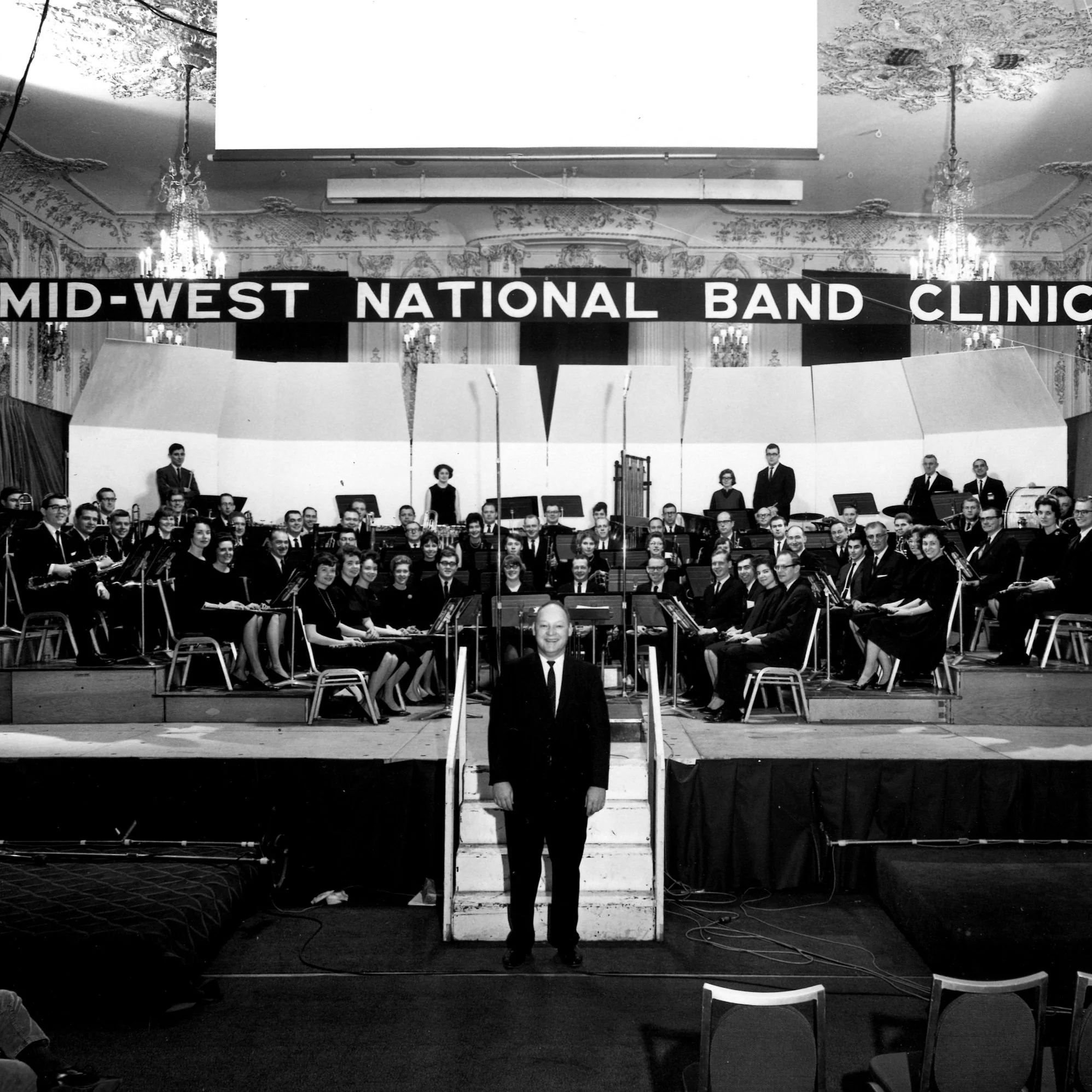
The 1970 Midwest Clinic marked the Northshore Concert Band’s fourth consecutive appearance at the conference and its seventh performance in eight years. This program highlighted the talents of several of the Band’s own members, featuring solo performances by Kathy Freer (clarinet), Robert Diehl (alto saxophone), Peggy Fox (trumpet), and Nancy Hinners (soprano). The concert also included guest appearances by close friends of the ensemble, including Frederick Miller, the assistant dean of the Northwestern University School of Music and Paynter’s former assistant, who led the Band in Jared Spears’ Three Cameos. Paynter’s current assistant, James Sudduth, conducted Joseph W. Jenkins’ Cuernavaca, adding a personal touch to the program.

Northshore Concert Band at the 1970 Midwest Clinic. Photo courtesy of the Michelle Smith Performing Arts Library Special Collections in the Performing Arts, University of Maryland.
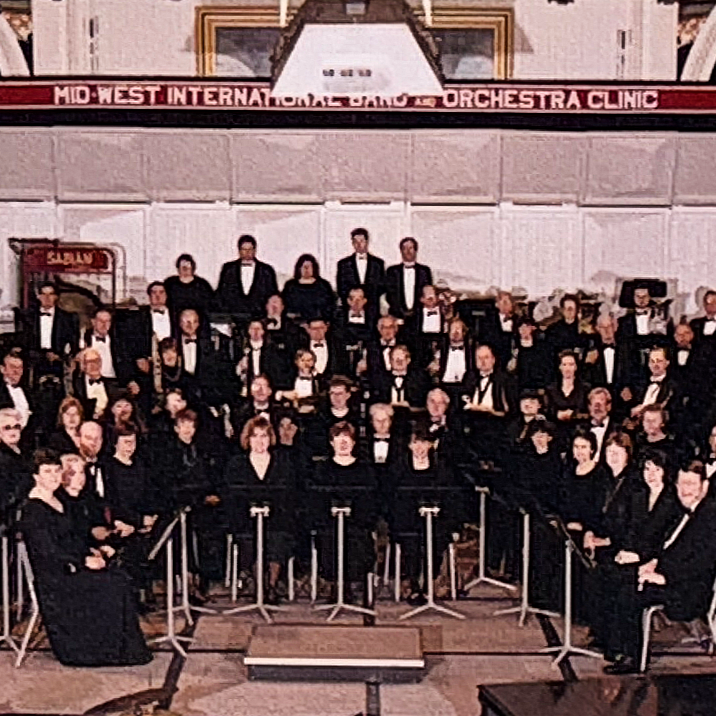
Following a five-year absence, the Northshore Concert Band returned to the Midwest Clinic in 1975, opening the conference before a standing-room-only audience of music educators. The program began with John Paynter’s Ceremonial Fanfare and included a diverse selection of transcriptions, new works, and educational pieces for developing musicians, reflecting the Band’s ongoing commitment to both artistry and education.
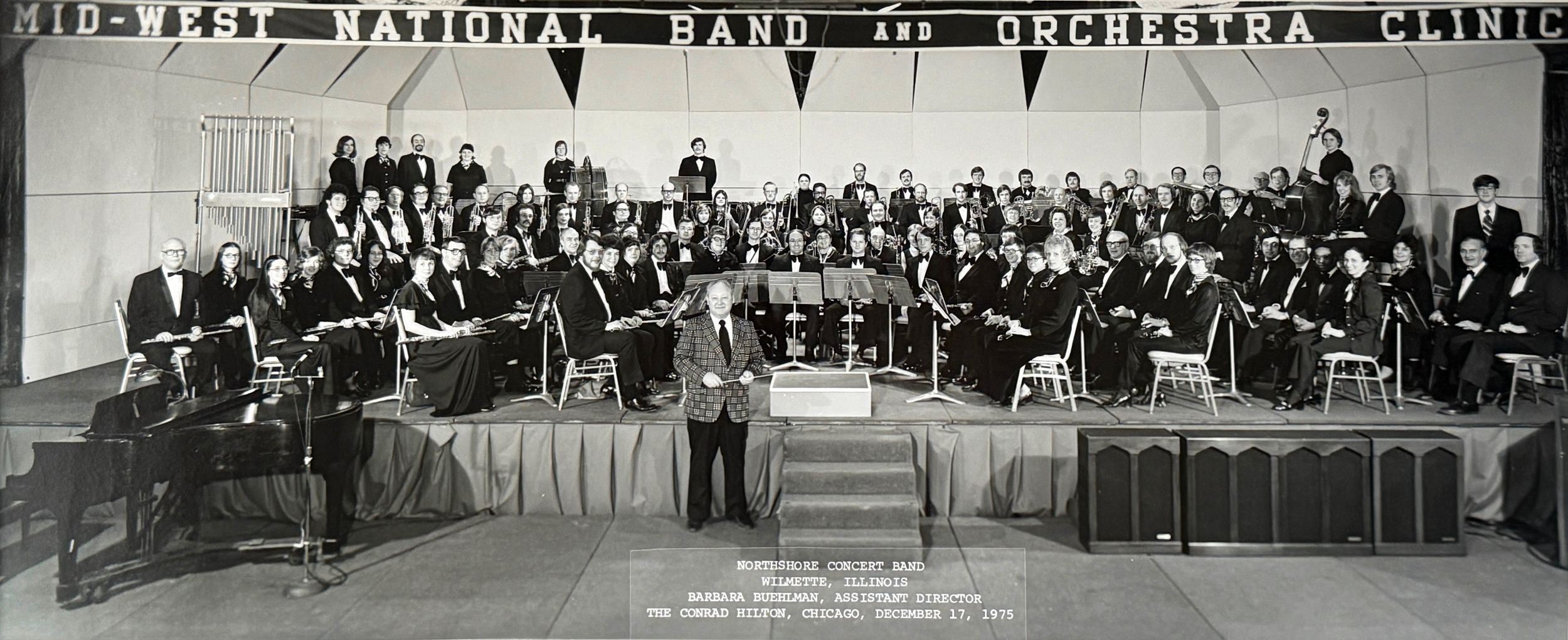
Northshore Concert Band at the 1975 Midwest Clinic.
In 1977, at the direction of the Midwest Clinic, the Band offered a lighter program for its ninth appearance at the conference. Highlights included ceremonial music composed by Paynter, Fisher Tull conducting his work Studies in Motion, and a variety of selections from Broadway and the silver screen, including Bernard Herrmann’s Citizen Kane Overture, selections from The Wiz and Annie, Barbra Streisand’s Evergreen, and Warren Barker’s The Magic of Disney. This program represented a shift from the more traditional concert band fare, demonstrating the ensemble’s versatility and wide-ranging appeal.
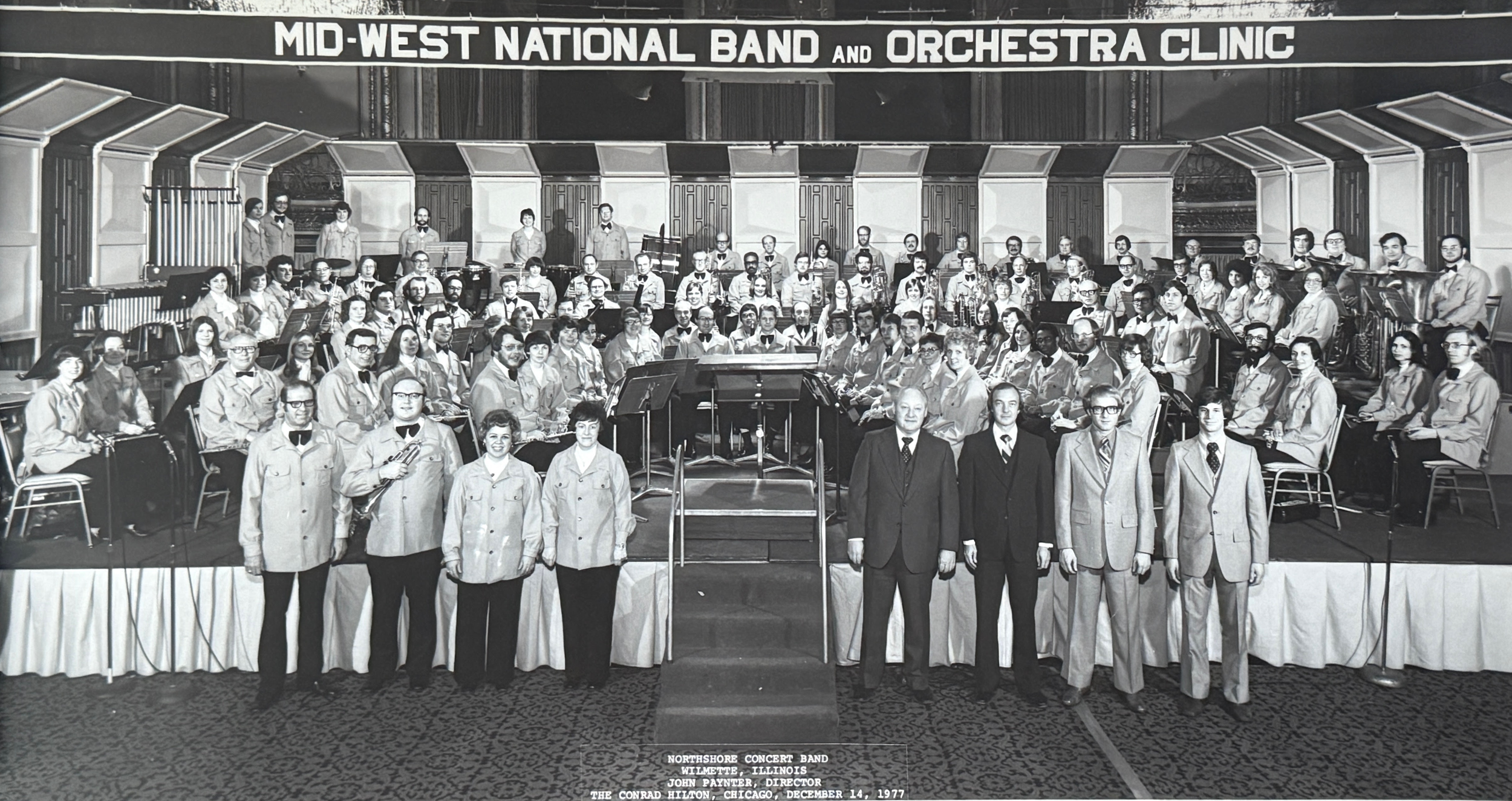
Northshore Concert Band at the 1977 Midwest Clinic.
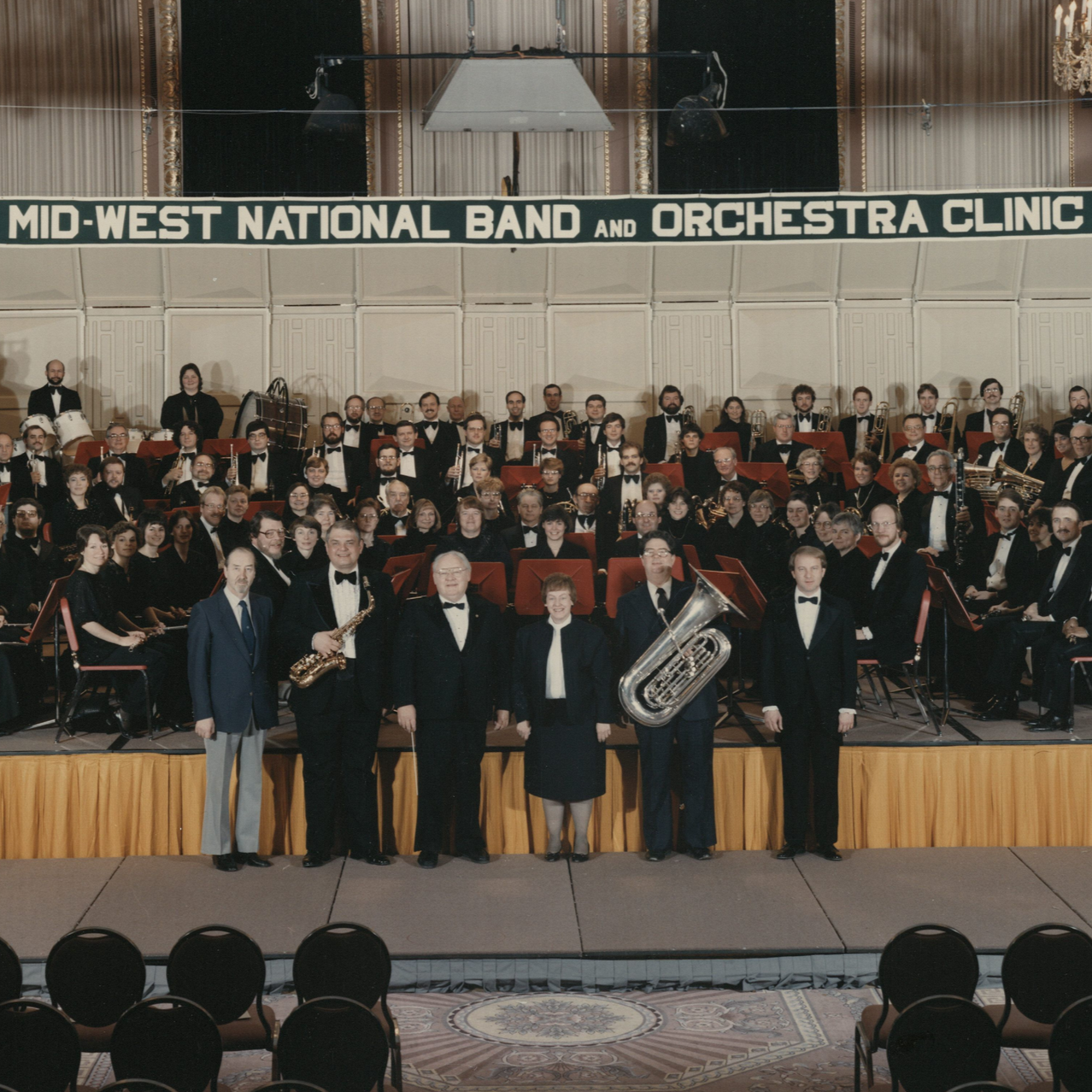
The 1978 Midwest Clinic was a landmark year for the Northshore Concert Band, marking its tenth and eleventh performances at the conference. The Band’s formal concert on the final day of the clinic featured guest conductor Alfred Reed leading selections from his own Othello, renowned saxophonist Frederick Hemke as soloist in Karel Husa’s Concerto for Alto Saxophone, and Col. Arnald D. Gabriel conducting Offenbach’s La Belle Hélène Overture. Later that day, the Band performed at the Clinic’s closing banquet, offering a program that included classic transcriptions, folk tune arrangements, and holiday selections. The dual performances received widespread acclaim, with many educators writing to Paynter afterward to express their admiration. Jerrold A. Lawless, conductor of the Tulsa Junior College Community Concert Band, remarked, “The concert has to be one of the most inspiring band programs I have ever heard. The main reason I came to the Midwest Clinic was to hear your group, and I certainly was not disappointed.”
Composer Alfred Reed himself offered high praise for the Band, reflecting on the crucial role of dedicated amateur musicians in the broader music world:
“One of the truest statements ever made concerning music was made just about a century ago by Richard Wagner when he stated that the spirit of music was really kept alive, not so much in professional concert halls and opera houses, but in the cottage piano of the devoted amateur. Now, the word 'amateur' did not mean, to him, what it has come to mean in our time. Amateur, derived from the French, meant one who pursued an art or a science for the sheer love of it and became expert at it from that point of view alone, and not just to earn a living.
In that sense, I would certainly agree that without the devoted amateurs there would very soon be no professionals, and in this sense the more devoted, talented and dedicated amateurs we have, the healthier the musical life of our country will be. To say therefore that the Northshore Concert Band represents amateur music-making at the highest possible level is, at least to me, an even greater compliment than to call them a fully professional organization.
I consider the opportunities I have had to work with this group as among the most productive and enjoyable I have ever known in my career, and I would hope that we may both continue in this vein for many years to come.”
In his annual holiday letter to the Band following these landmark performances, John Paynter wrote:
“I still can’t find the words to tell you how wonderfully you performed for the [Midwest Clinic]. Although you pleased and thrilled me with the way you came through, you did not surprise me! Along about September I smelled this one coming … I think the very thought of any band playing back-to-back concerts at a major music clinic was a challenge you simply wouldn’t reject.
How does one even begin to account for the spiritual meaning in a thing like this? You knew on Saturday morning at 9:30 that everything was going to go right. The mood of the Band was there. Lots of nervousness, lots of itching around, but all of it so proud, like a thoroughbred almost wild while waiting for the starting bell.
The concert was a sheer delight! So responsive, attentive, sensitive, and blended in effort. Our tempo was too quick on some of the Slavonic Rhapsody because you wanted it that way, and too slow on some of America, the Beautiful for the same reason, and both changes made for gorgeous music.”
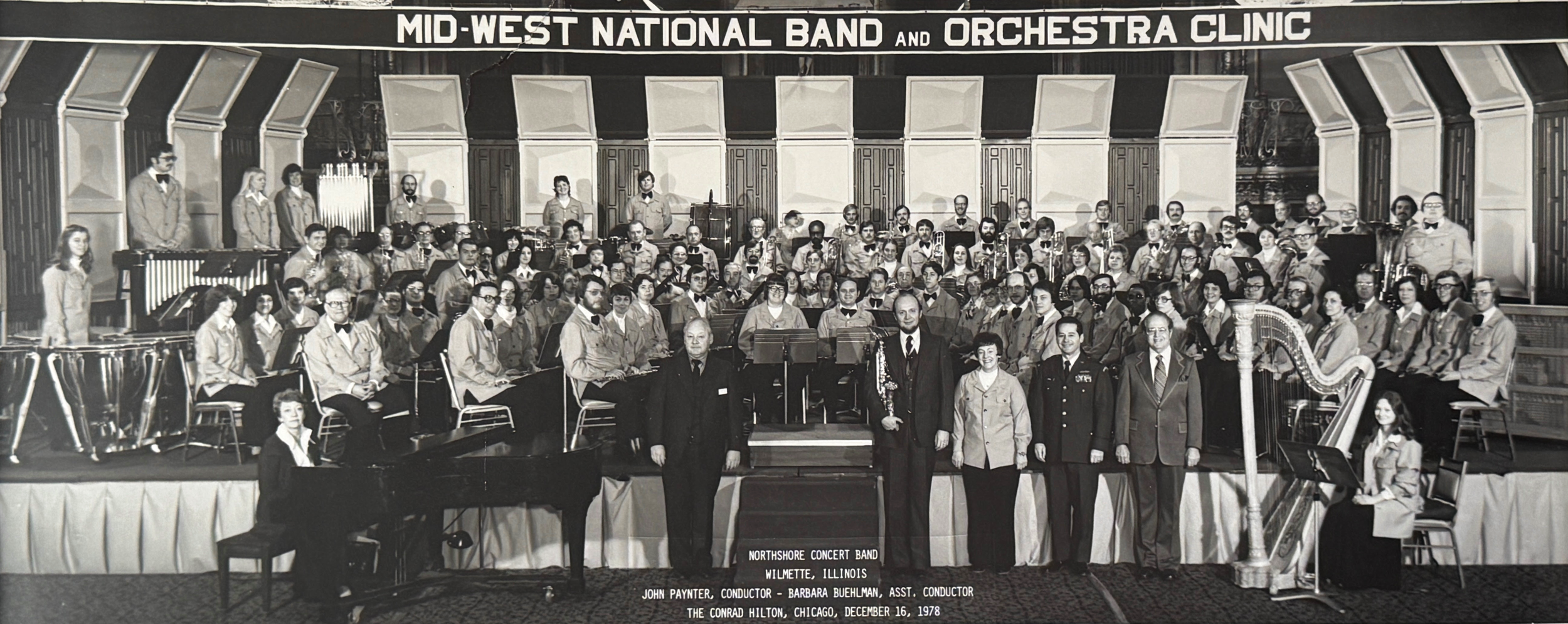
Northshore Concert Band at the 1978 Midwest Clinic.
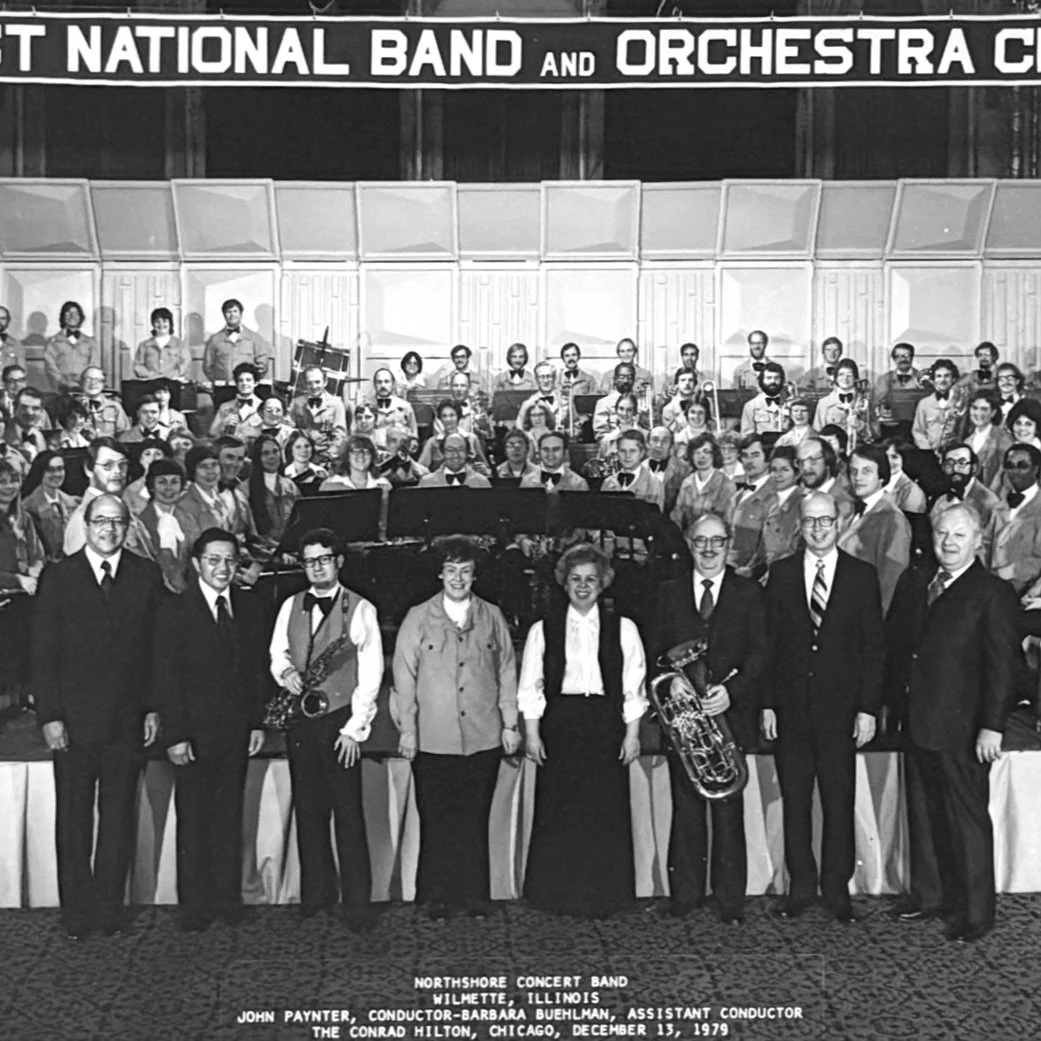
The 1979 performance at the Midwest Clinic remains one of the most memorable in the Band’s history, due in part to a dramatic opening sequence described in Victor Zajec’s history of the Midwest Clinic:
“When asked which Midwest performance stands out in their minds, many Northshore Concert Band members roll their eyes, smirk, shake their heads, and vividly recall the opening ‘Fanfare’ which John Paynter had conceived and written for the Band’s 1979 Midwest concert. The premise was that the Band would take the stage, begin to warm up individually, and then, as if by magic, simultaneously burst into the opening Fanfare without any director on the podium … Chaos and panic hovered over the Band for an extended period of time, and then perhaps by divine intervention (or more likely, an offstage Paynter downbeat) the Band finally came together and valiantly performed the Fanfare. It was a hit!”
Despite this rocky start, the concert included standout performances of Donald Hunsberger’s transcription of Shostakovich’s Festive Overture, Malcolm Arnold’s Four Scottish Dances, and Vaclav Nelhýbel’s Symphonic Movement, earning praise from directors and soloists alike for the Band’s spirit and superb musicianship.
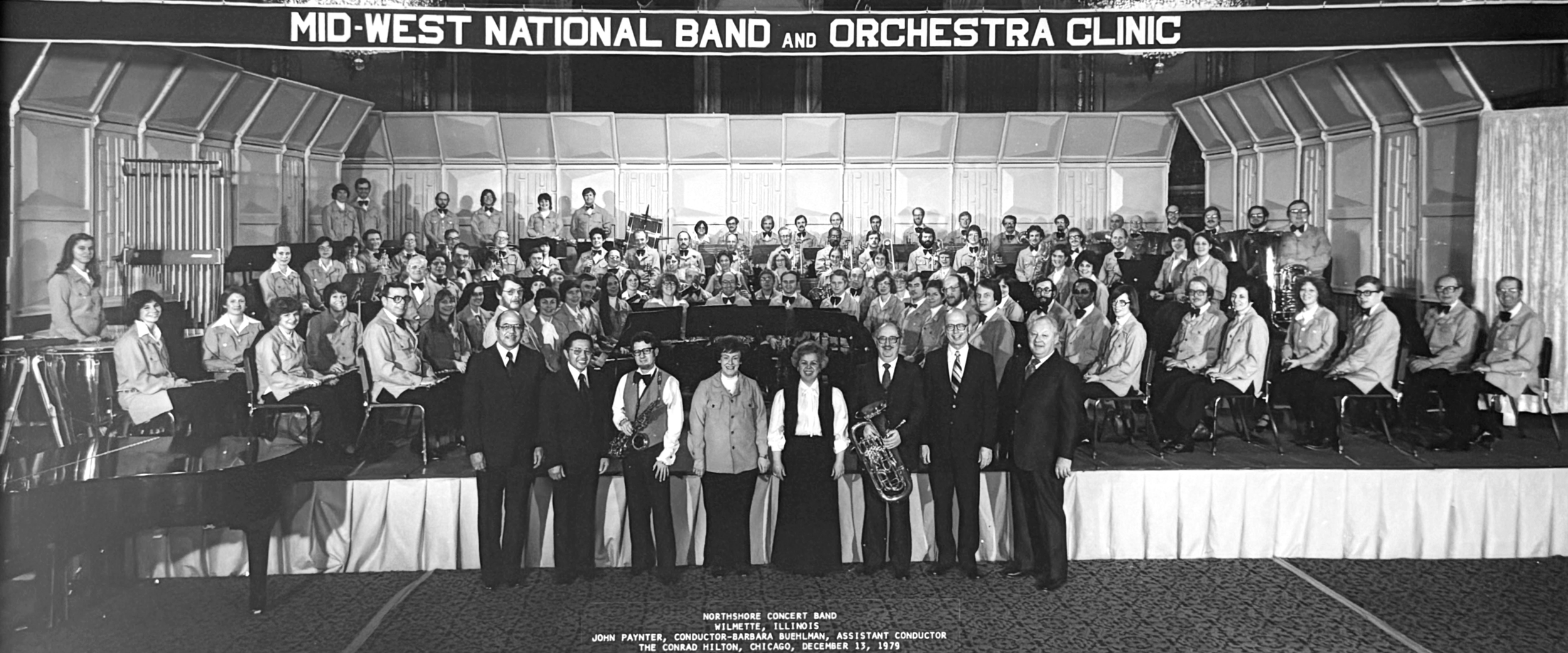
Northshore Concert Band at the 1979 Midwest Clinic.