NCB at the Midwest Clinic: 1960-1969
Since its founding, the Northshore Concert Band has been a driving force in the community band movement, setting high standards for musical excellence and community engagement. Nowhere has this impact been more clearly demonstrated than through its decades-long relationship with the Midwest Clinic, the world’s largest instrumental music education conference. This series chronicles the Band’s history at the Midwest Clinic, beginning with its groundbreaking first invitation in 1963 and continuing through the present day.
The 1960s marked a formative decade for the ensemble, characterized by bold programming, innovative transcriptions, and a growing national reputation under the visionary leadership of founder and Music Director John Paynter. These early performances helped establish the Northshore Concert Band as a trailblazer in the concert band world, setting the stage for the many Midwest Clinic appearances that would follow.
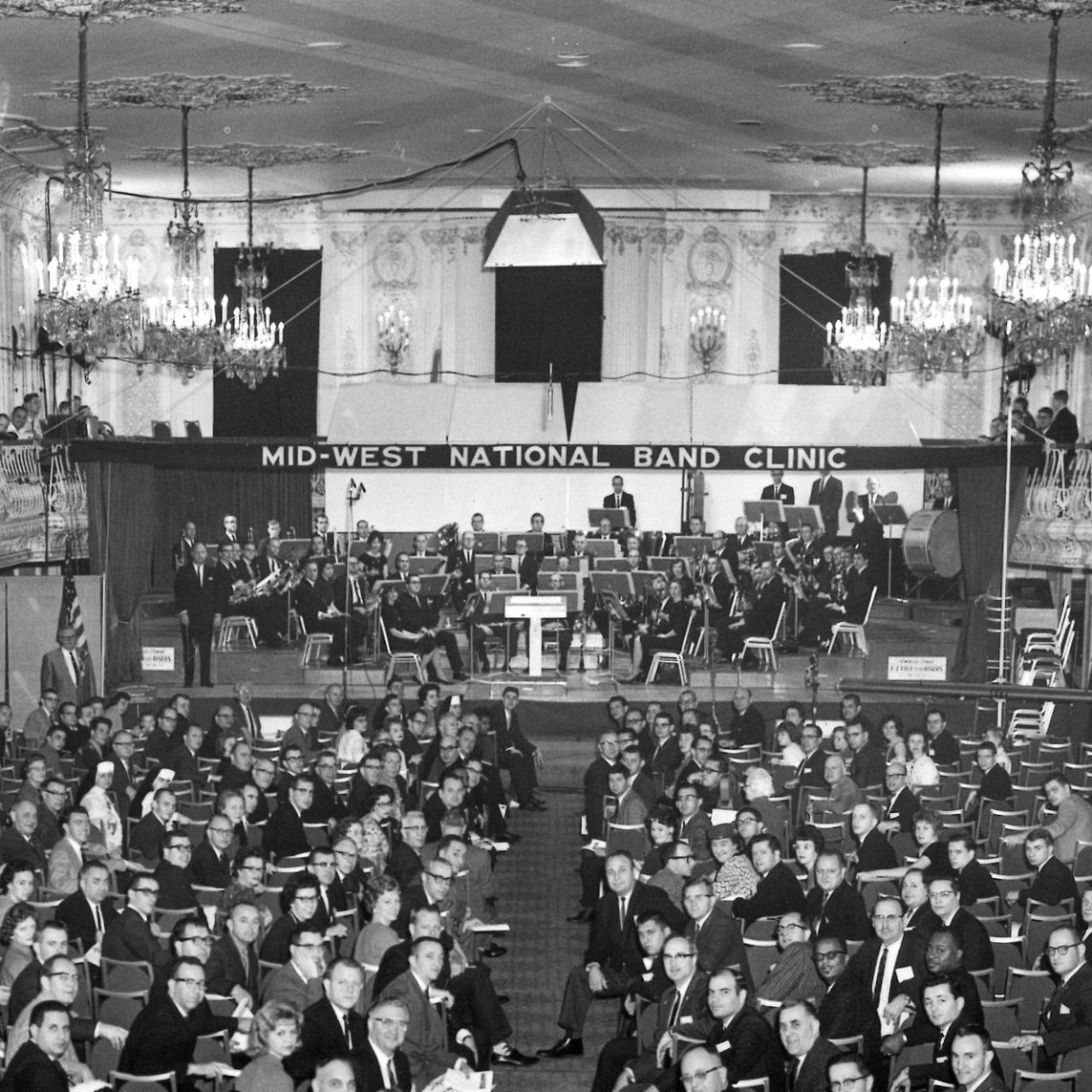
Northshore Concert Band at the 1963 Midwest Clinic. Photo courtesy of the Michelle Smith Performing Arts Library Special Collections in the Performing Arts, University of Maryland.
In 1963, the Northshore Concert Band made its debut at the Midwest Clinic, becoming only the third community band in the conference’s history to receive an invitation. The program opened with John Paynter’s Fanfare on America and featured a range of compelling transcriptions for concert band, including James Ployhar’s arrangement of Black is the Color of My True Love’s Hair and selections from Richard Wagner’s opera Rienzi. As the final act of the conference, the performance played a crucial role in establishing the Band’s national reputation, earning a standing ovation and an invitation to return in 1964.
The 1964 performance was dedicated to the conference’s guests of honor, Mr. and Mrs. Meredith Willson. Best known for his Broadway hit The Music Man, Willson was to receive the Midwest Clinic Medal of Honor that year and led the Band in his composition, Here’s Love. Continuing what would become a Northshore Concert Band tradition, the program opened with a John Paynter original, Fanfare on Chicago, and included a mix of original works, transcriptions, and Broadway selections, reflecting the breadth of the Band’s repertoire.
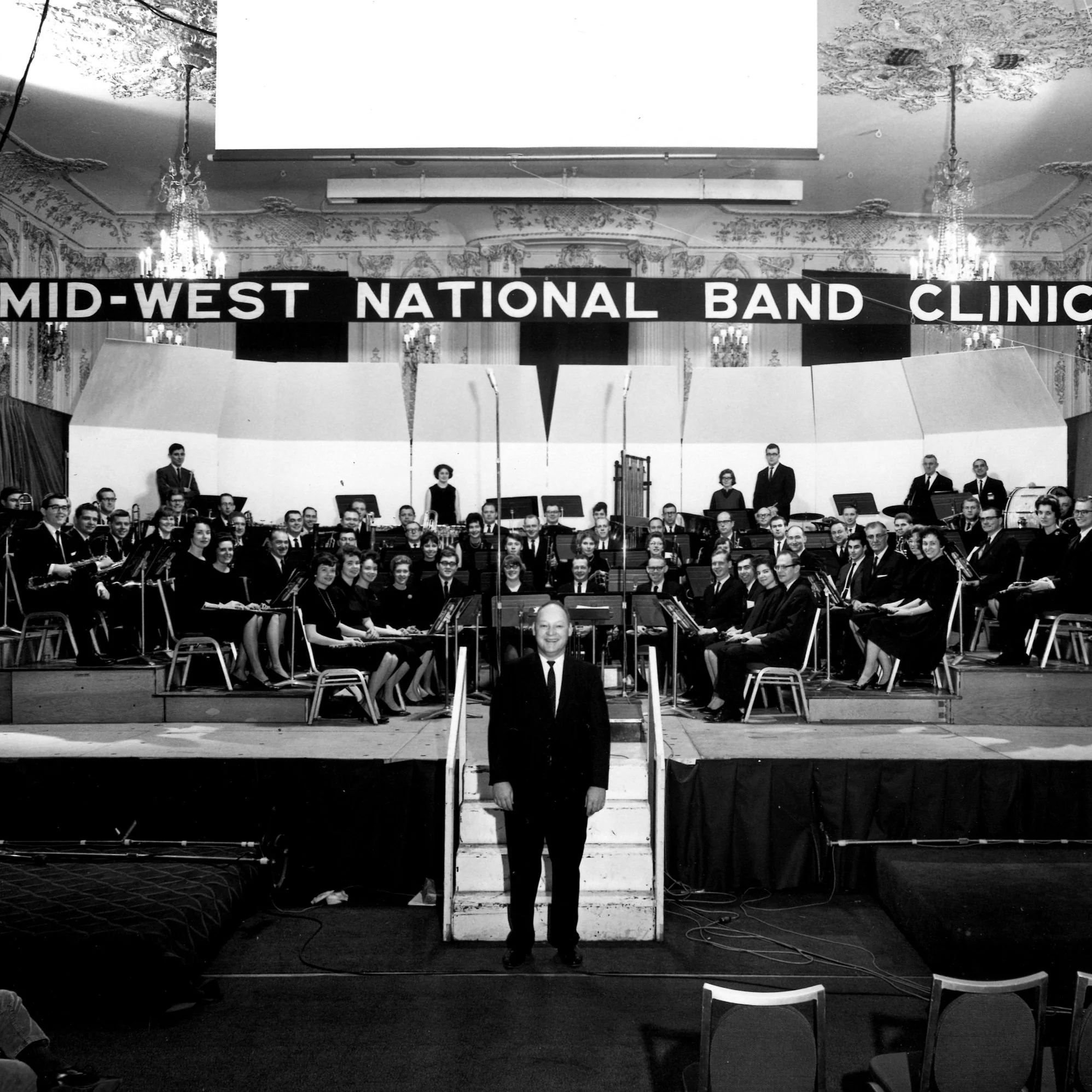
Northshore Concert Band at the 1965 Midwest Clinic. Photo courtesy of the Michelle Smith Performing Arts Library Special Collections in the Performing Arts, University of Maryland.
In 1965, the Band set a Midwest Clinic milestone by performing for the third consecutive year — an unprecedented achievement. The program began with Paynter’s Fanfare — Three for the Show and included 23 compositions, with a particular focus on presenting new publications. To showcase the talent within the Band, the program also featured chamber works, including a concerto for woodwind quintet and band, a trumpet trio, and a flute choir led by Assistant Conductor Barbara Buehlman. In a holiday letter to the Band, Paynter reflected on the experience: “It has been a long time since I experienced more pure pleasure than I did in the Northshore Band’s performance for the Midwest Clinic. What a delight to know the back-bending effort that every one of you put forth throughout the program … It was a thrill, not for the music, but for the manner in which the music was performed, that I will always cherish.”
Northshore Concert Band at the 1967 Midwest Clinic.
The 1967 concert marked the Band’s fourth appearance at the Midwest Clinic and featured its most technically ambitious program to date. Paynter’s Fanfare on America returned from the 1963 performance, followed by his arrangement of The Star-Spangled Banner. The program included Berlioz’s Beatrice and Benedict Overture, Arnold Schoenberg’s Theme and Variations, and one of the earliest recorded performances of Malcolm Arnold’s Four Scottish Dances, which Paynter transcribed for the Band. (The Arnold transcription would go on to be published in 1978 and remains a staple of the ensemble’s repertoire.)
For its fifth appearance in 1968, the Band assembled an impressive roster of guest artists. After the traditional patriotic opening — Paynter’s Prologue — One Nation, Indivisible and his arrangement of the National Anthem — the Band welcomed clarinetist Mitchell Lurie for Carl Maria von Weber’s Clarinet Concerto No. 2, percussionist Terry Applebaum for Darius Milhaud’s Percussion Concerto, and guest conductors Lt. Col. William F. Santelmann and Toshio Akiyama, adding a dramatic and international flair to the performance.
Northshore Concert Band at the 1968 Midwest Clinic. Photo courtesy of the Michelle Smith Performing Arts Library Special Collections in the Performing Arts, University of Maryland.
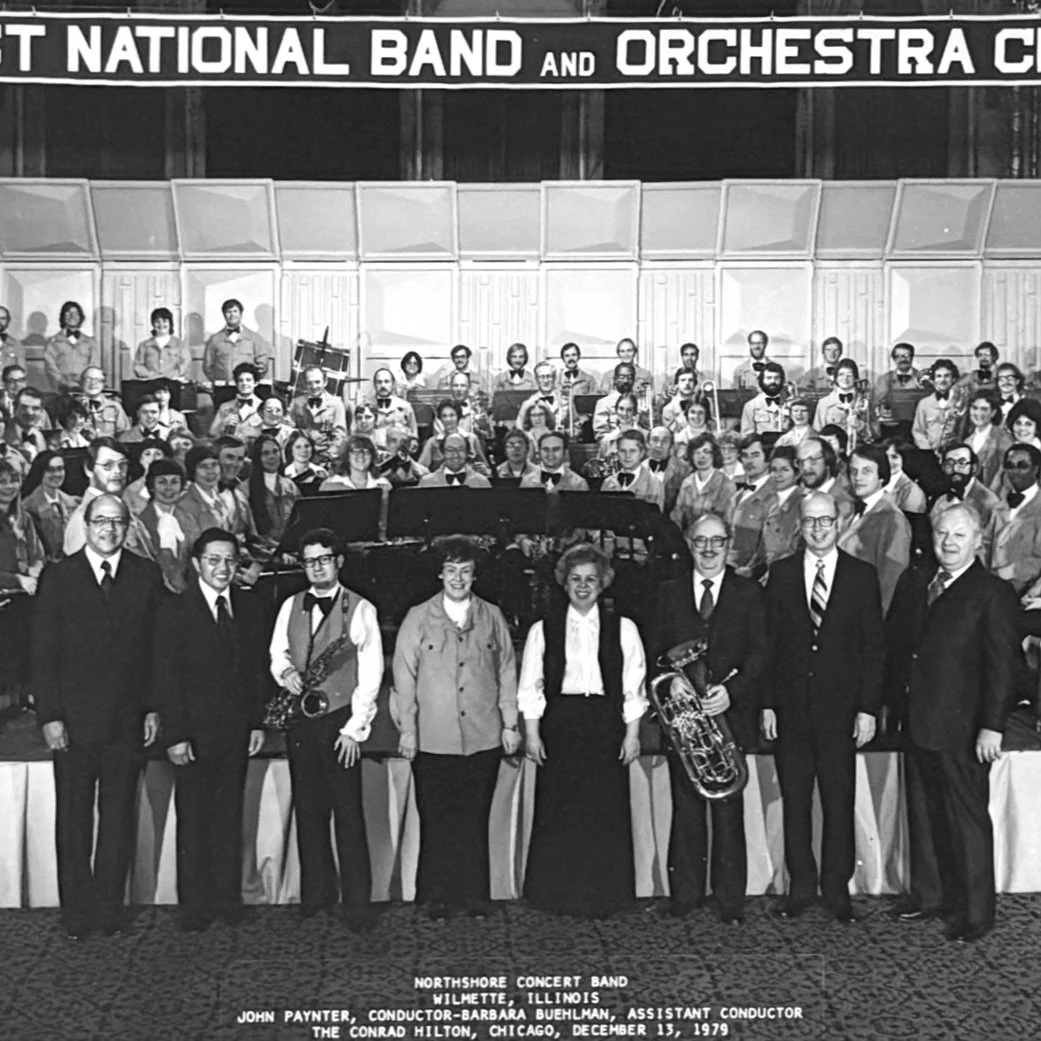
The 1969 performance garnered national recognition, highlighted in The Instrumentalist by Frederic Boots, who praised the “fine concert by John Paynter and his remarkable Northshore Concert Band,” noting its role in inspiring musicians from the Quad Cities to form the Mississippi Valley Wind Ensemble. The program, featuring works published in 1968 and 1969, demonstrated the Band’s versatility, spanning music suitable for beginner groups to pieces demanding professional-level skill.
Northshore Concert Band at the 1969 Midwest Clinic.